

Your store makes a sale near month-end. Shopify records the order in June, the payment moves through a gateway, and the payout reaches the bank in July. Which month gets the income?
The payout date cannot answer that by itself. Your accounting method decides when income and expenses enter the books; your Shopify records must show the events behind that decision.
Leafy’s Quick Answer
Cash accounting generally records income when it is received and expenses when they are paid. Accrual accounting generally records income when it is earned and expenses when they are incurred. Ask your accountant which method and recognition rules apply, then use LedgerLeaf to keep the Shopify-side dates repeatable: sales and payment fields in a saved Free export profile, with Pro payout reporting and inventory snapshots when the workflow needs them.
This is general bookkeeping guidance, not accounting or tax advice. Eligibility, timing rules, inventory treatment, and method changes depend on your business and jurisdiction.
Cash and accrual answer different timing questions
Imagine a €120 order that is fulfilled on 30 June, paid on 2 July and included in a €116 bank payout on 4 July after fees. The exact accounting entry depends on the facts and the rules that apply, but the basic contrast looks like this:
| Event | Cash view | Accrual view | Evidence to keep |
|---|---|---|---|
| Sale is earned | Usually not recorded merely because it was earned | Income is generally recorded when earned | LedgerLeaf sales export with order, fulfilment, amount, tax, and status fields selected for the approved process |
| Customer payment is received | Usually the income trigger | Usually settles a balance already recognised | Payment date, method, status, and order reference in the saved LedgerLeaf profile |
| Shopify payout reaches the bank | Reconciles gateway funds to cash; it is not automatically the sales date | Reconciles cash and any gateway balance | LedgerLeaf Pro payout reporting for Shopify Payments plus the bank deposit |
| Supplier bill is paid | Expense is generally recorded when paid | Expense is generally recorded when incurred | Supplier invoice and payment record kept outside LedgerLeaf |
“Generally” matters. UK guidance sets out its own cash-basis rules. The US IRS also describes the cash and accrual methods, with restrictions and exceptions including stock rules. Other jurisdictions and business types differ. Do not switch methods—or pick a convenient date—because one month looks better.
Why ecommerce makes the choice feel confusing
An e-commerce sale creates several dates: order, fulfilment, payment authorisation, capture, refund, payout, bank deposit, supplier bill, and stock movement. Cash accounting can feel simpler because it follows money. Accrual accounting can make period performance clearer because it matches activity to when it was earned or incurred.
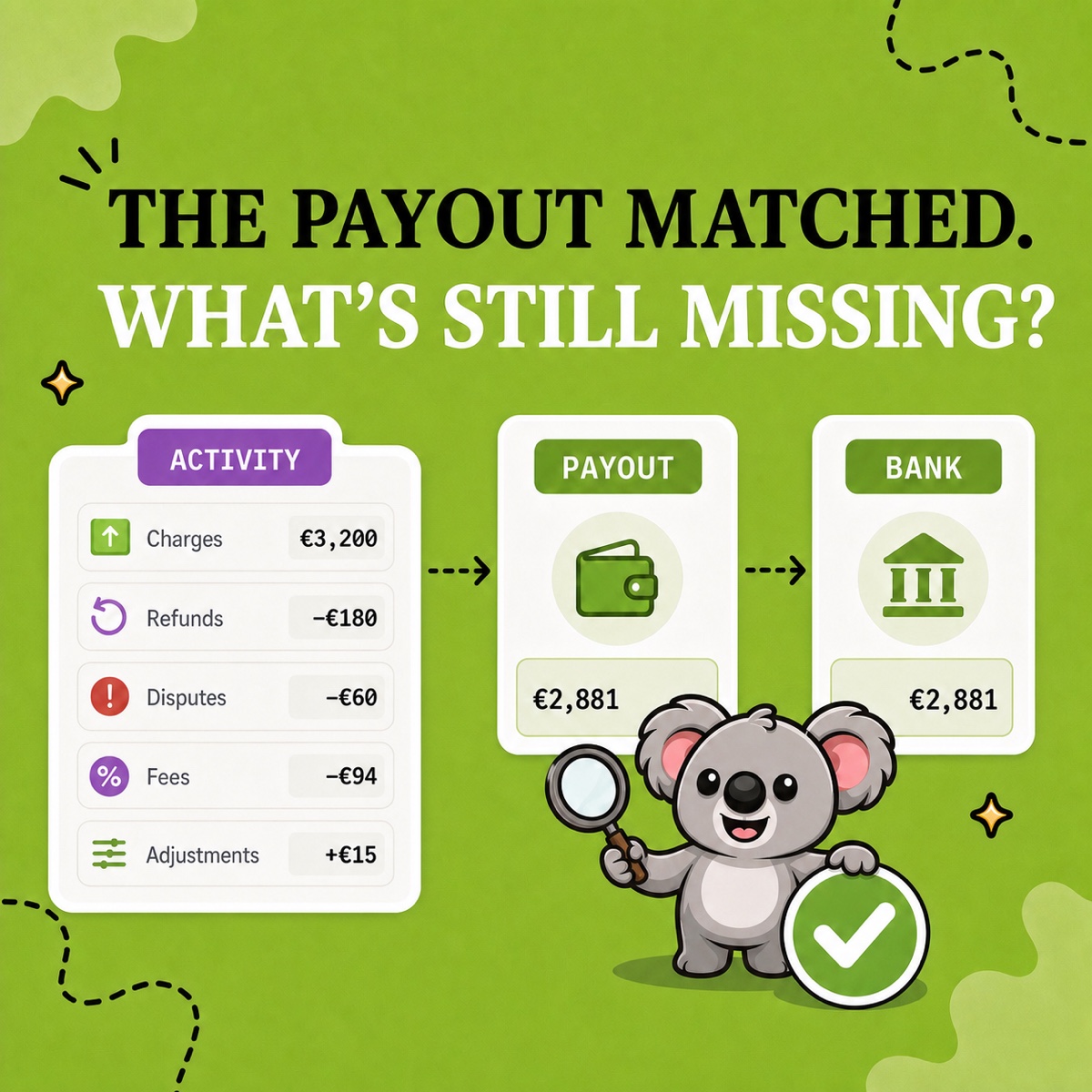
Neither method turns a net payout into a complete sales record. Shopify’s Finance reports separate sales activity from payments. Its payout reconciliation report separately explains Shopify Payments balance activity and explicitly says it is not a revenue statement for accounting purposes.
That is the operational problem LedgerLeaf solves: it keeps the Shopify event trail available in a stable format, so the approved method can be applied to evidence instead of a guessed bank total.
Choose the method before building the export
Ask the person responsible for your books to confirm:
- which method the business may and should use;
- what “received,” “earned,” “paid,” and “incurred” mean for its transactions;
- how refunds, deposits, gift cards, taxes, and unpaid orders are treated;
- whether stock requires a special or accrual treatment;
- which date, currency, and status fields must support each period.
Stock deserves special attention. Buying stock does not always create the same-period expense as selling it. LedgerLeaf Pro can preserve stock snapshots and SKU-level operational records, but product costs and the business’s accounting policy still determine the accounting entries.
Turn the approved method into a LedgerLeaf routine
Once the rules are agreed, make them repeatable inside Shopify:
- Save the sales source. In LedgerLeaf Free, create a CSV or Excel profile with the order, payment, date, amount, discount, return, tax, currency, status, and SKU fields the approved method needs.
- Keep both timelines visible. Do not delete order dates because the books follow cash, or payment dates because they follow accrual. The difference is useful evidence.
- Reconcile payouts separately. Use LedgerLeaf Pro payout reporting for Shopify Payments to connect payment activity, fees, and payouts to the bank. Keep separate records for other gateways.
- Preserve the stock position. For product businesses, save the relevant LedgerLeaf Pro inventory snapshot beside supplier costs and physical-count evidence.
- Repeat the same profile and period boundary. Label the file with the basis, date range, time zone, and currency, then use the same structure next close.
The memorable connection is simple: LedgerLeaf keeps the Shopify dates behind your accounting method ready to repeat. Your accountant chooses the rule; LedgerLeaf keeps the sales, payment, payout, tax and stock trail clear enough to apply it.
Build your repeatable Shopify evidence pack with LedgerLeaf.