

A SKU convention is scalable when the thousandth product is no harder to name than the hundredth. The code stays short, each segment has one meaning, and a new teammate can create the next SKU without inventing another abbreviation.
For Shopify merchants, that structure should do two jobs. It should identify every ordinary variant clearly in Shopify, then give LedgerLeaf Pro deliberate patterns for the linked listings and bundles whose stock needs to move together. The naming convention creates the language; LedgerLeaf turns the intended stock relationships into rules.
Leafy’s Quick Answer
Start with a pattern such as
FAMILY-STYLE-COLOUR-SIZE, keep every ordinary variant unique, and document the allowed abbreviations. Test it against products you sell now and products you may add later. When SKUs describe linked listings or bundle components, connect them with an explicit LedgerLeaf rule instead of expecting the name itself to synchronize inventory.
Build the pattern from stock decisions
Do not try to squeeze the whole product description into a SKU. Include only the attributes that help someone distinguish, pick, count, or relate the stocked item.
A clothing store might choose:
TEE-CREW-OLV-M
| Segment | Meaning | Rule |
|---|---|---|
TEE |
Product family | One approved code per family |
CREW |
Style | Keep the same position in every apparel SKU |
OLV |
Colour | OLV always means olive |
M |
Size | Use the store’s normal size language |
Shopify’s SKU guidance recommends short, simple, consistent codes; avoiding spaces, special characters, and lookalikes such as 0/O and 1/I; and planning for growth. It suggests keeping SKUs no longer than 16 characters where practical, with some businesses able to work in 4–8 characters.
That is a constraint, not a challenge to encode more. If material never changes how stock is picked or reported, leave it out. If size does, give size a permanent segment.
Make a dictionary before making more SKUs
Write a one-page SKU dictionary with the segment order, separator, case, approved abbreviations, and owner. This prevents OLV, OLIVE, and GRN from becoming three names for the same colour.
Then test the convention with four awkward cases:
- the product family with the most variants;
- two products whose names look similar;
- a likely future category;
- a linked listing or bundle that will need a LedgerLeaf rule.
If the pattern becomes unreadable or runs out of distinct codes, revise the dictionary—not each individual SKU.
Reserve patterns for real inventory relationships
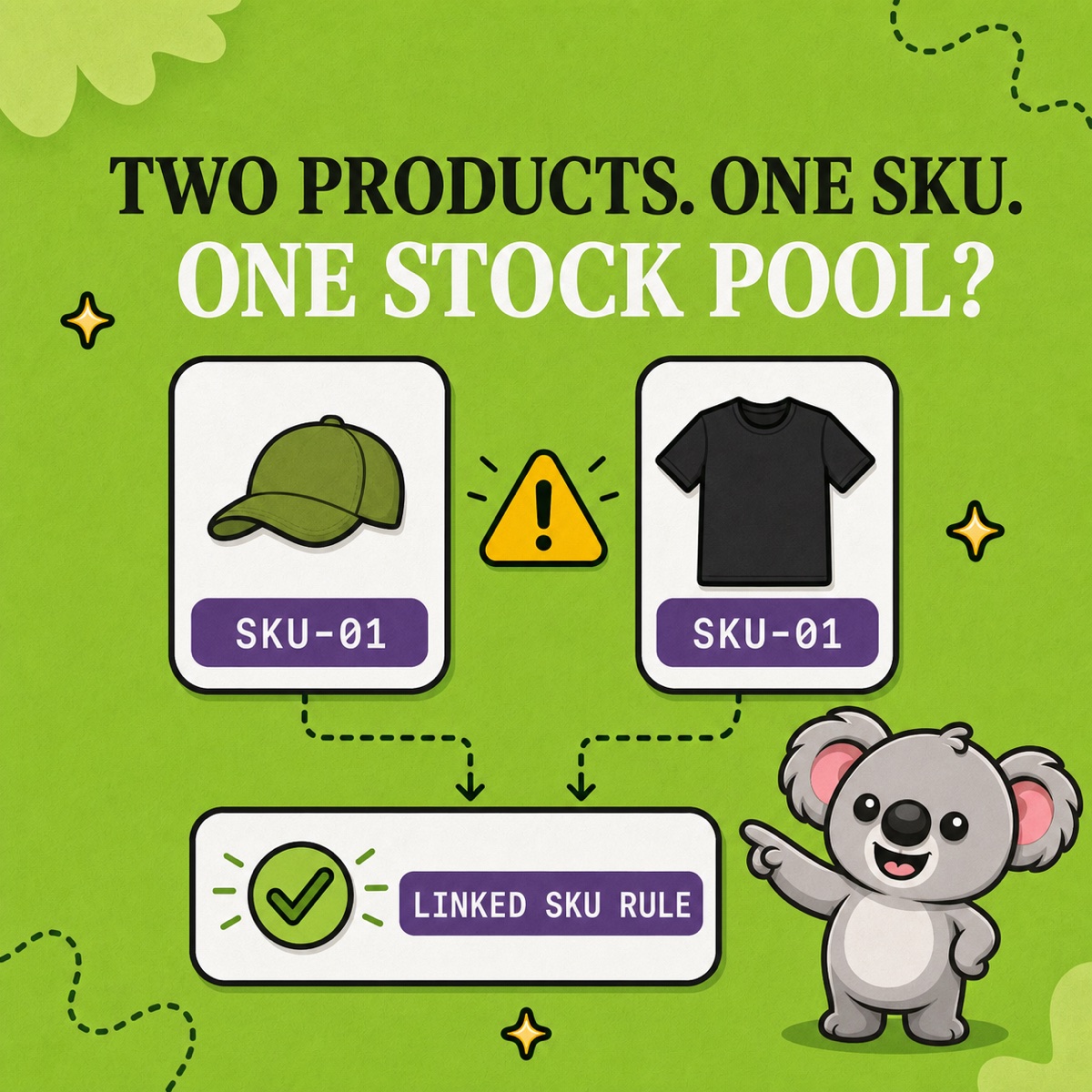
Ordinary Shopify variants should have unique SKUs. Shopify says unique codes support inventory tracking and sales reporting, and it warns that duplicates can create problems for inventory and third-party integrations.
When two listings sell the same physical stock, keep their identifiers distinct but visibly related. For example:
MUG-OLV-12-COREMUG-OLV-12-GIFT
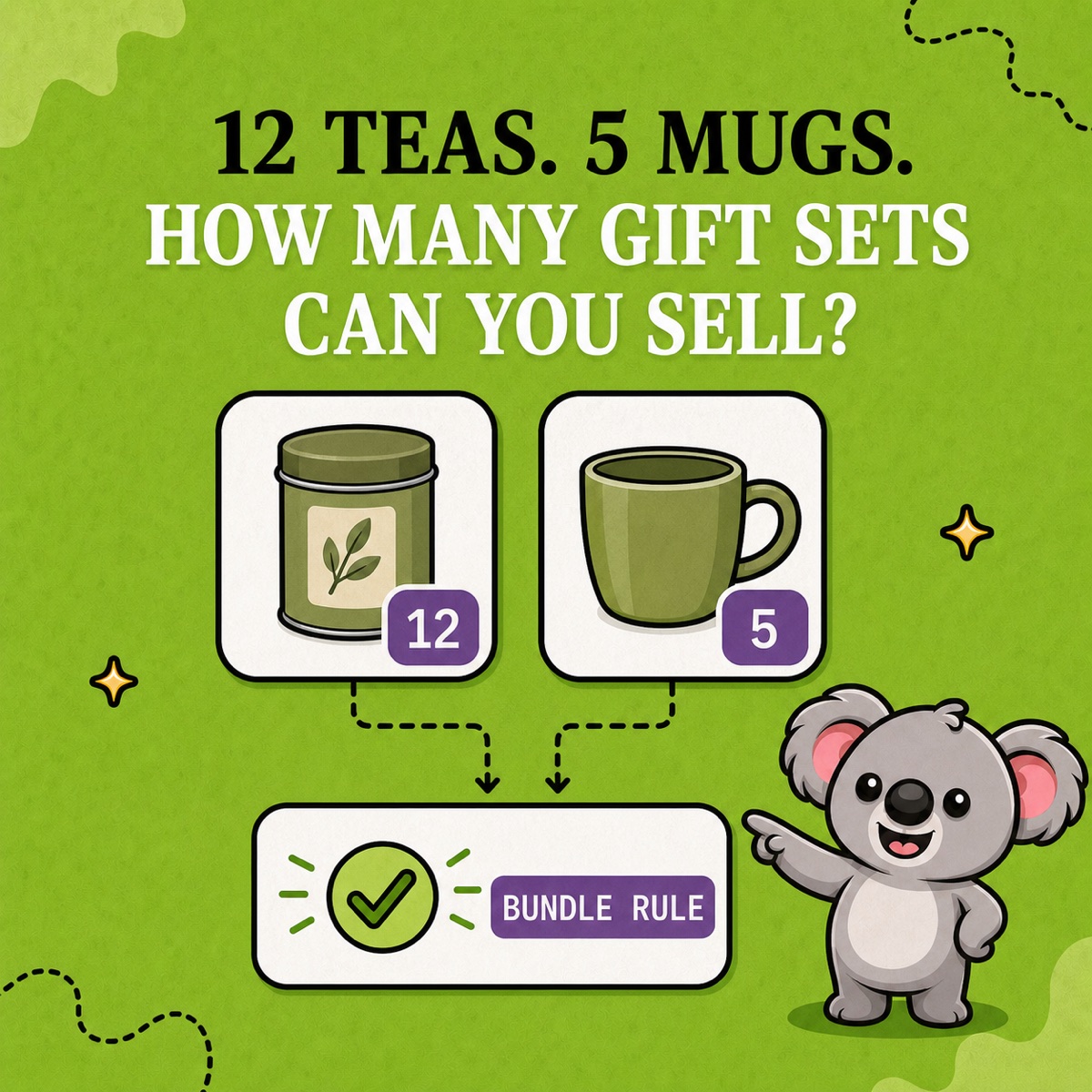
The stable base shows the relationship; the suffix preserves the listing identity. In LedgerLeaf Pro, a linked-SKU rule can use a readable pattern to keep related products aligned. For a bundle, keep the parent and components identifiable, then use a bundle rule to describe what the parent depends on.
This separation matters: a shared prefix suggests a relationship, but only the reviewed LedgerLeaf rule makes that relationship operational. LedgerLeaf supports custom SKU-based inventory automation for linked SKUs and bundles, with minimum, maximum, or exact sync logic available for the behaviour you intend.
Leafy’s Watch-Out
Never make a pattern so broad that unrelated products can match it. Review the products covered by a LedgerLeaf rule, start with a small group, and test a sale, return, manual adjustment, and restock before widening the pattern.
Roll it out without breaking the catalogue
For a small catalogue, edit each variant’s SKU field in Shopify. For a larger catalogue, Shopify supports its bulk editor and product CSV workflow. Preserve a mapping of old and new codes, update connected warehouse or fulfilment systems, and change one product family at a time.
Remember that SKUs are case-sensitive in connected apps and that adding a SKU later does not rewrite historical order data. A controlled rollout protects the trail behind old sales while the new convention becomes the standard.
The finished system is more than tidy labels. Every new variant has an obvious code, every special stock relationship is visible in LedgerLeaf, and growth no longer depends on one person remembering why SKU-104B was different from SKU104-B.
Turn your rule-ready SKU convention into inventory automation with LedgerLeaf Pro.